
Japanese Ryokan Stay Guide: What To Expect at A Traditional Inn in Japan
We sometimes receive questions from clients asking why some stays at traditional Japanese inns (ryokan) are so expensive, or what the experience of staying in one is really like.
In this blog, I will introduce the premium services that come with a ryokan stay in Japan and share the stories behind them.
Note: This blog is not sponsored and contains no advertisements. If you’d like to learn more about staying at a premium ryokan in Japan, feel free to contact us directly!

First, what is Ryokan (Japanese inn)?
While both are types of accommodation, “ryokan” and “hotel” are called by different names in Japan. But what exactly is the difference between them? When planning a trip, you may sometimes wonder whether to stay at a ryokan or a hotel in Japan.
In this article, I’ll briefly introduce how they differ, along with the advantages and disadvantages of each, to help you figure out if it is worth a stay in an expensive ryokan.
The Difference Between a Ryokan and a Hotel

In the past, Japanese law clearly distinguished between the two.
Under the Inns and Hotels Act, ryokan were defined as “facilities with mainly Japanese-style architecture and equipment, providing lodging for a fee,” with at least five guest rooms. Hotels were defined as “facilities with mainly Western-style architecture and equipment, providing lodging for a fee,” with at least ten guest rooms.
However, in 2018, an amendment to the law unified the two categories into “Ryokan/Hotel Business.” This change means that in the future, the distinction between a ryokan and a hotel may become less clear.
Still, based on current and past practices and experiences, here still lies common differences between these two kinds of accommodations.
Building Style and Concept
Traditionally, ryokan feature Japanese-style architecture and interiors, while hotels are more Western in style. In general, ryokan focus on Japanese hospitality (omotenashi), while hotels tend to prioritize privacy, though today there is some overlap.
Guest Rooms

Ryokan typically offer Japanese-style rooms with tatami flooring, while hotels mostly have Western-style rooms. That said, many ryokan now provide Western-style rooms or Japanese rooms with beds, so the distinction isn’t absolute.
Meals

At a ryokan, dinner is usually included in the stay, and guests may have the option of dining in a banquet hall, in their own room, or in a semi-private space. Hotels, on the other hand, often do not include dinner as standard; guests may eat at the hotel’s restaurant or dine out.
In terms of cuisine, ryokan meals are often Japanese-style: mostly Kaiseki Dinner or Japanese-styled course dinner, while hotels tend to offer Western-style dishes.
Pros and Cons of a Ryokan Stay
A ryokan stay is ideal if you want attentive hospitality, local cuisine, and the chance to relax in hot springs. However, the in-room service, such as staff setting up your meal or preparing your bedding may feel intrusive or uncomfortable for some guests.
Pros and Cons of a Hotel Stay
Hotels generally have more rooms than ryokan, making it easier to accommodate last-minute bookings. They also tend to provide greater privacy. For business trips or budget-conscious travel, business hotels can be very convenient. However, hotels may not offer the same level of bathing facilities or elaborate dinners that you would expect from a ryokan.
Is the $1,500-Per-Night Japanese Ryokan Stay Worth It?
It depends on how much you value accommodation and cultural experiences during your vacation.
I believe some quality ryokan stays nowadays still delivers the true essence of Omotenashi, Japanese hospitality, through thoughtfully crafted seasonal and local dishes, meticulous attention to service and detail, and an emphasis on an overall experience designed to make your stay seamless and enjoyable.
Check out my ryokan stay diary to know more details as follows.

Departing from Mishima via the Izu-Hakone Railway, it takes just over 30 minutes to reach Shuzenji.
Upon arrival, a staff was already waiting at the station exit with a sign with the name of the ryokan, ready to escort us to the ryokan with an Alphard. A short 20-minute drive later, we arrived, checked in, and headed straight to dinner.
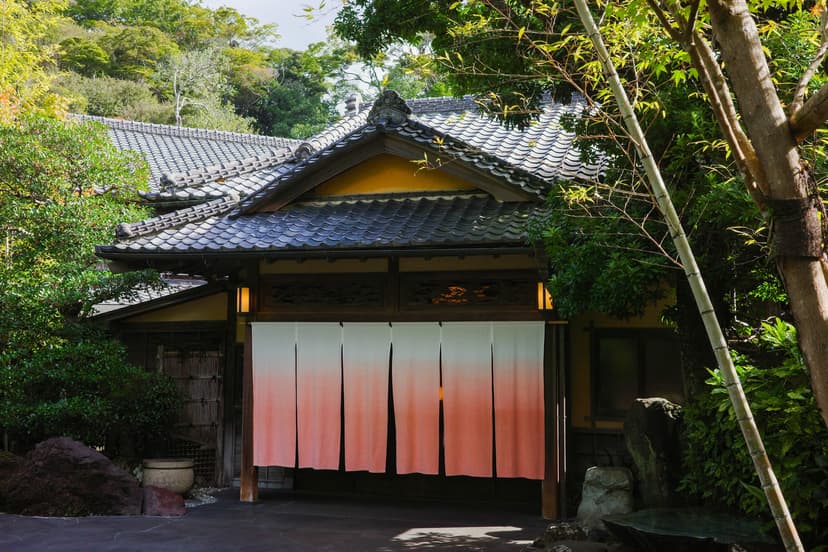
The ryokan has only 16 rooms, creating a tranquil atmosphere that made it feel as though we were the only guests staying there that night.

The two-story dining room greeted us with warm konbanwa (Good evening) calls from the staff team. For the first time, I saw a printed Gokendate menu in a ryokan: nine courses, each explained in detail by the staff, highlighting the history and local sourcing of every ingredient.
Some ryokan use the word kondate instead of “menu” because it reflects more than just a list of dishes.
Kondate emphasizes the thoughtful planning and cultural meaning behind a meal, rather than simply showing options to choose from.
Unlike a restaurant menu, where guests pick dishes, a ryokan’s kondate is a curated course meal (kaiseki) designed to showcase:
- Seasonality – ingredients chosen to highlight the current season
- Locality – produce and specialties that support the local region
- Balance – taste, presentation, and nutrition considered together
- Hospitality (Omotenashi) – the idea that the meal is prepared as a sincere offering with Japanese hospitality, not just food service
By using kondate, ryokan express that the dinner is not just about eating, but about experiencing Japanese culture, aesthetics, and hospitality in a carefully arranged sequence.

The dinner beautifully reflects the chef’s and culinary team’s dedication, striking a harmonious balance between innovative flavors and the use of abundant local ingredients to support the community.
Even after a full meal, we were given a generous portion of rice balls to ensure no one went hungry overnight.

After finishing dinner, we had some time to explore the ryokan and our room. The interior design sets a ryokan apart from standard hotels, featuring traditional tatami flooring, antique-style furniture, and an atmosphere that reflects historic Japanese aesthetics.
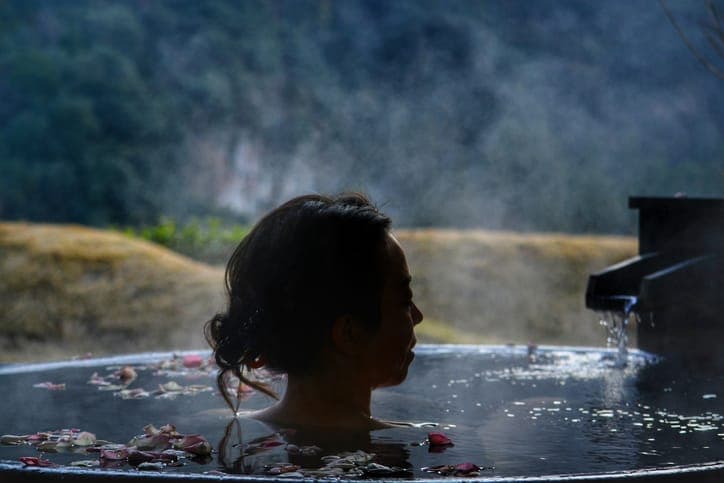
The next part of was the onsen (hot springs). It was my first time in Izu, and I enjoyed two of the ryokan’s on-site hot springs.

The property has three public baths: two rotated by gender, and one private bath bookable via LINE for 50 minutes.
With only 16 rooms in total, even the public baths felt nearly private. Early morning in the bath, I soaked alone, leaves from nearby maple trees just beginning to turn red drifting on the water surface, breathing deeply in the quiet.
I truly believe that autumn is the best season to experience a ryokan in Japan for the first time, as the scenery is at its most stunning and the weather is pleasantly cool, without the chill of winter.
You may enjoy the brilliant red maple leaves and golden ginkgo foliage. I visited this ryokan in late September, but it was still quite warm with the heat from summer. For the optimal experience, I would recommend visiting in late October or early November.
Autumn is also peak travel season in Japan, so I highly recommend booking accommodations and experiences, especially ryokans, well in advance to ensure a seamless and memorable stay.

Walking on the wooden floors, my slippers made soft, echoing sounds, perfectly in tune with this historic building, which has welcomed literary figures like Kawabata Yasunari and Shimazaki Toson for over 150 years and is now a registered tangible cultural property in Japan.
The evening was peaceful, broken only by rustling leaves in the wind, and I slept better than I have in a long time: a perfect blend of tradition, comfort, and serenity.

The following morning felt like walking in the footsteps of these authors: a truly enjoyable experience. It was more than just a stay; it felt like immersing oneself in a living piece of historical heritage.
The ryokan stay can truly be described as perfect, combining exquisite cuisine, attentive yet unobtrusive service, thoughtful attention to detail, and engaging on-site attractions. If you’re still undecided, I highly recommend including a ryokan stay in your upcoming autumn visit to Japan: it’s an experience not to be missed.

Curious what it’s really like to stay in a traditional Japanese ryokan?
Experience the charm, hospitality, and seasonal delights of a ryokan on a TOMOGO! tour. Relax in serene rooms, soak in hot springs, and enjoy authentic Japanese cuisine. Book your ryokan experience today.